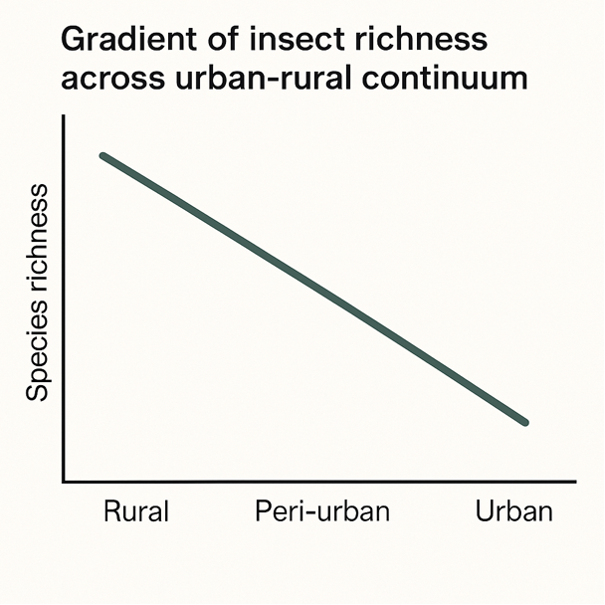
The increasing pace of urbanization, combined with the spread of artificial light at night (ALAN) and the ongoing impacts of climate change, has led to the significant decline of nocturnal insect biodiversity across the globe. Nocturnal insects play a critical role in ecosystem functions such as pollination, nutrient cycling, and food web stability, yet they remain one of the most neglected groups in global conservation policy. This review synthesizes findings from 2020 to 2025, analyzing the effects of urban expansion, ALAN, and climate variability on insect diversity, behavior, and survival. Urban landscapes disrupt natural habitats and reduce connectivity. ALAN interferes with insect navigation, mating, and feeding, while climate change drives phenological mismatches and shifts in distribution. The review also explores modern approaches such as GIS-based predictive modeling and proposes evidence-driven mitigation strategies including dark-sky policies, biodiversity-sensitive urban planning, and international collaboration. The urgency to implement these solutions is emphasized in light of escalating environmental pressures and the global biodiversity crisis.

Blog
- Home
- /
- Review ,
- Volume 1, Issue 1
- /
- Global impacts of urbanization, light pollution, and climate change on nocturnal insect biodiversity: Challenges and conservation strategies